You write every word. Inklyne stays in the margins.
Inklyne reads each chapter and tells you what isn't working, and why, so your next draft is better than your last.
Make your next draft better than your last.
You write every word. Inklyne stays in the margins, with notes on structure, characters and style.
The lighthouse hadn't lit its lamp in eleven years. Mara climbed the path, the cold key clenched in her fist. She was afraid, so afraid, more afraid than she had ever been.
At the top, the door gave way without a sound, as if someone had been waiting for her. Her grandfather had explained everything, years before, in a letter she often reread.
She pushed the door open.
Prima Lectio2 notes
Style· paragraph 01
“Afraid” three times in one sentence: the feeling is named instead of shown.
afraid, so afraid, more afraid
Scenes· paragraph 02
The letter's backstory lands on the threshold and stalls the scene.
in a letter she often reread
To-do Move the letter's backstory
- 01
Upload your manuscript
DOCX, ODT or Markdown, as it stands.
- 02
Connect Claude
Two minutes, and we walk you through it. A free account covers one or two chapter readings a day.
- 03
Get your reading
Prima Lectio reads each chapter in full, angle by angle, at the rigor you choose.
- 04
Revise, then ask again
Any note can join your worklist. Work it or dismiss it, then ask for a new reading.
What your AI does, and what it will never do.
In the margins
- Reads each chapter in full, not an isolated paragraph
- Names what's off, and why: a blurry theme, a sagging second act, a character with nothing at stake, a scene without conflict
- Leaves its notes in the margins, next to the passage they're about
- Keeps your private writer profile current: your strengths, your blind spots
Never
- Write a sentence for you
- Rewrite your text into a "better" version
- Suggest a continuation, an ending, or a title
Writing is hard. With Inklyne it still is, but you know where to focus your effort.
A record of your writing practice
Your sessions over time, the words you typed and the words you pasted, where each paragraph came from. It's your Writing Journey, tied to your text: for you alone, or for your readers if you choose to make it public.
Writing Journey · The LighthouseExample
- Sessions
- 14
- Active time
- 9h 20
- Words written
- 11,480
- Typed
- 97%
Where the words came from
A whole reading, at the rigor you choose
A verdict, what holds, and where to start. Five angles of analysis, one finding each, every one backed by your own sentences.
- Five angles of analysis
- Core, structure, scenes, characters, style: from what it means down to the sentence.
- Five rungs of rigor
- From novice to grandmaster: you say how hard your text should be read.
- Your Claude account
- The reading runs on your Claude account, connected to Inklyne in two minutes. A free account usually covers one or two chapter readings a day. You stay in control of your data.
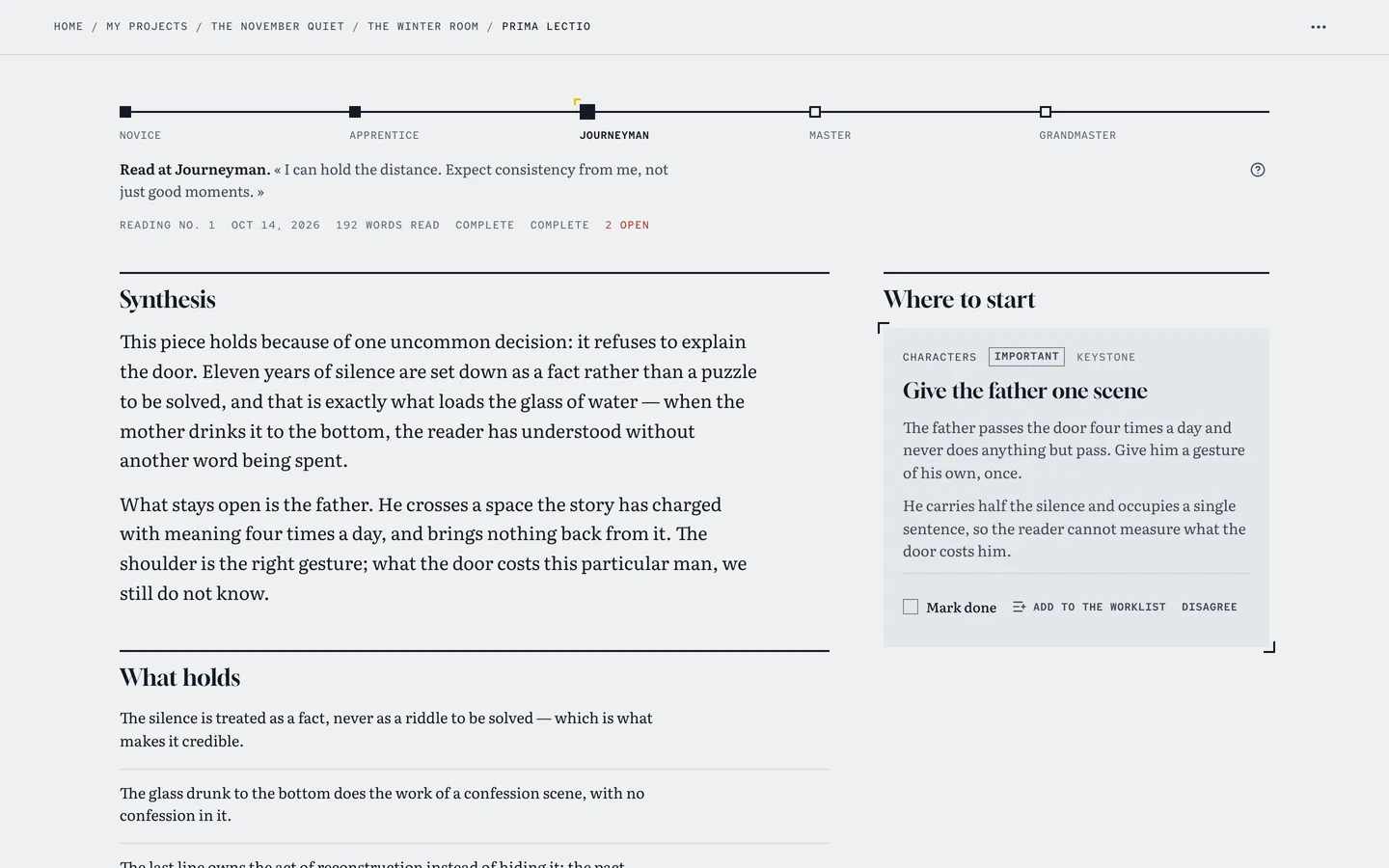
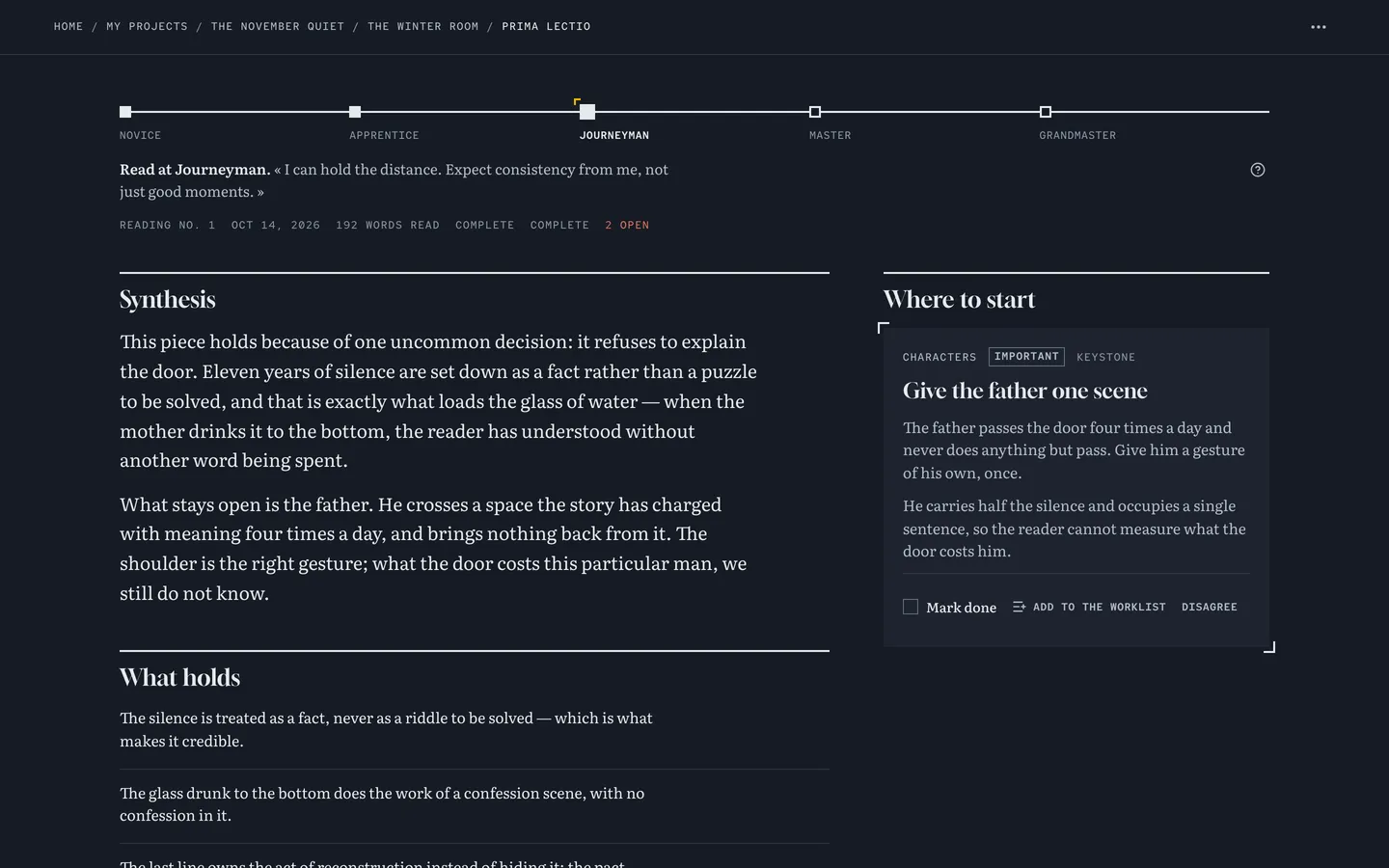
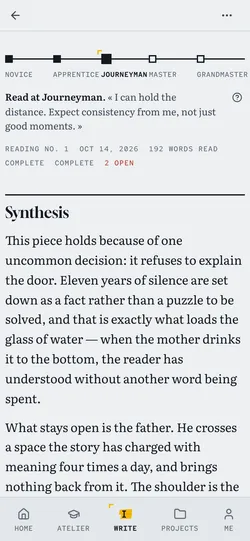
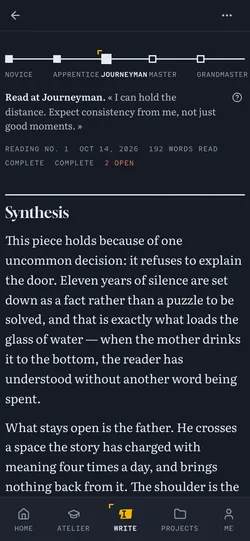
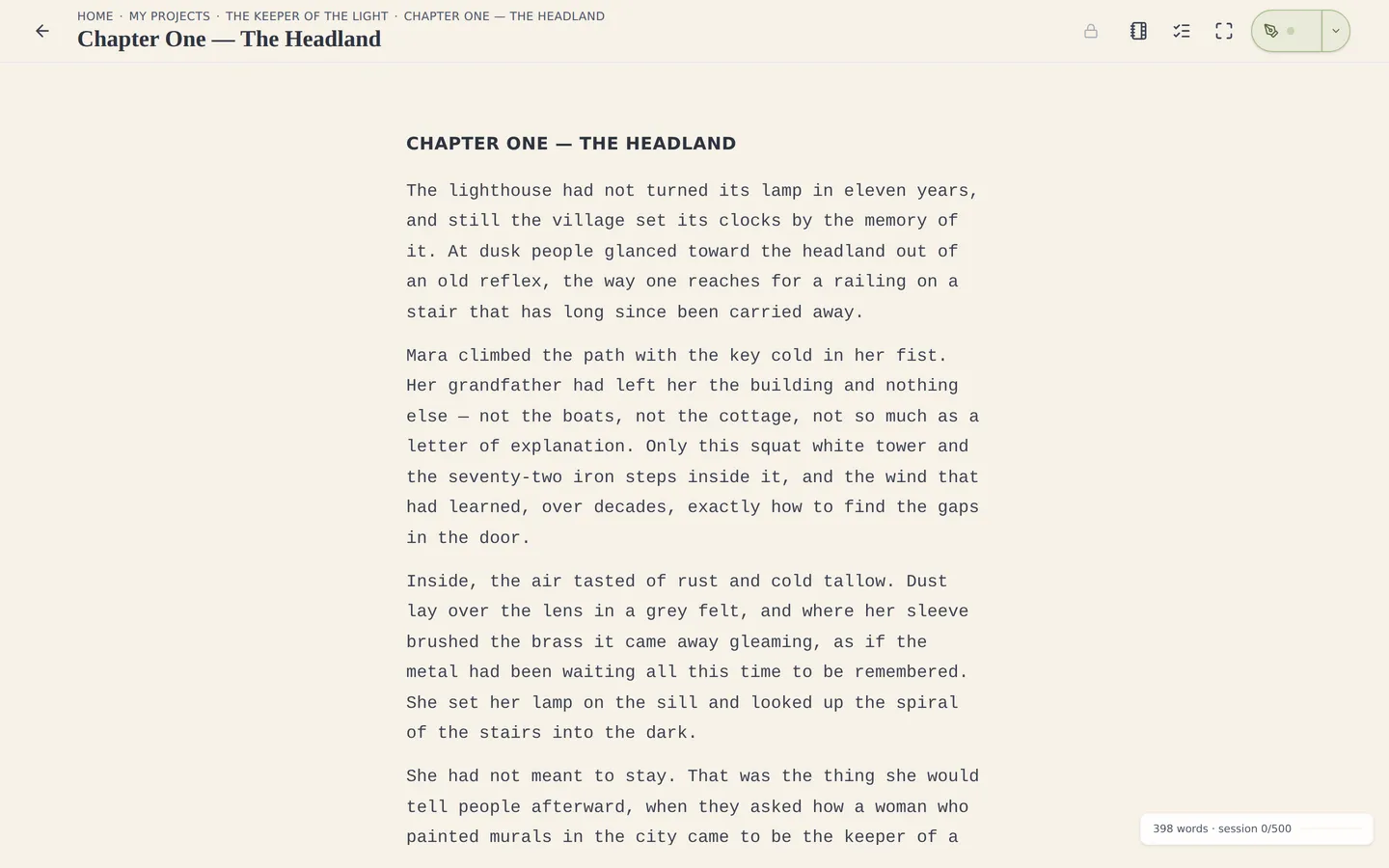
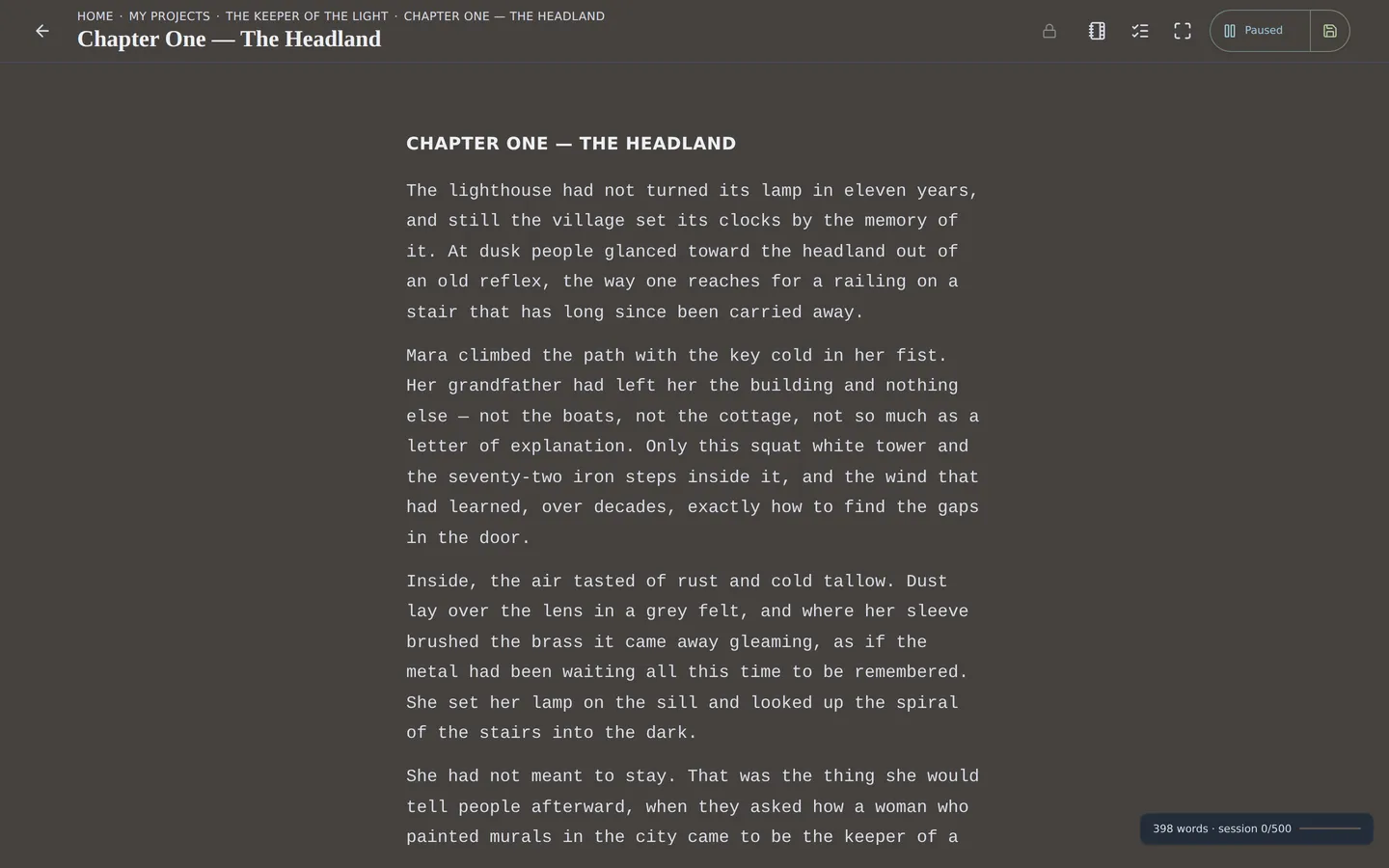
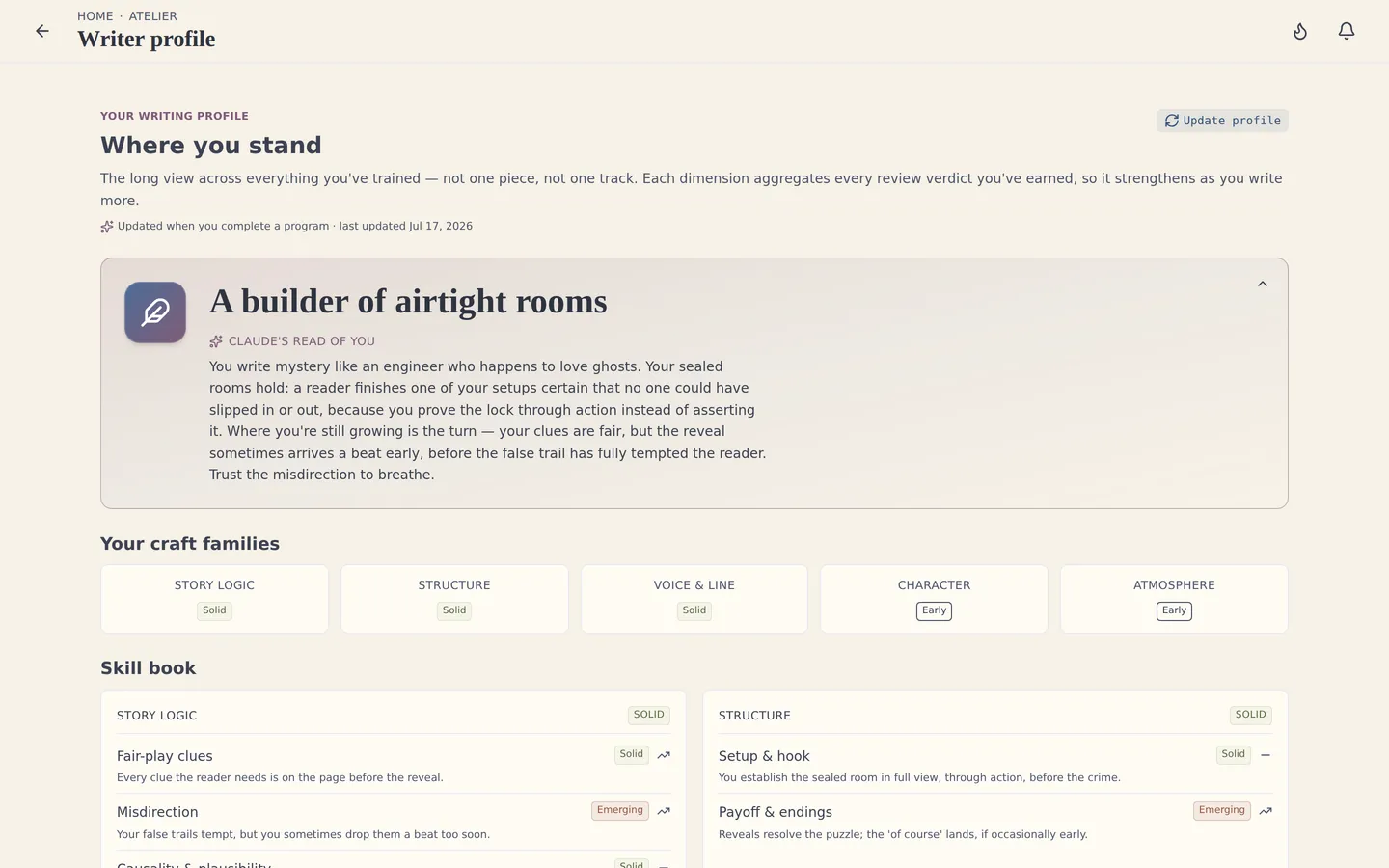
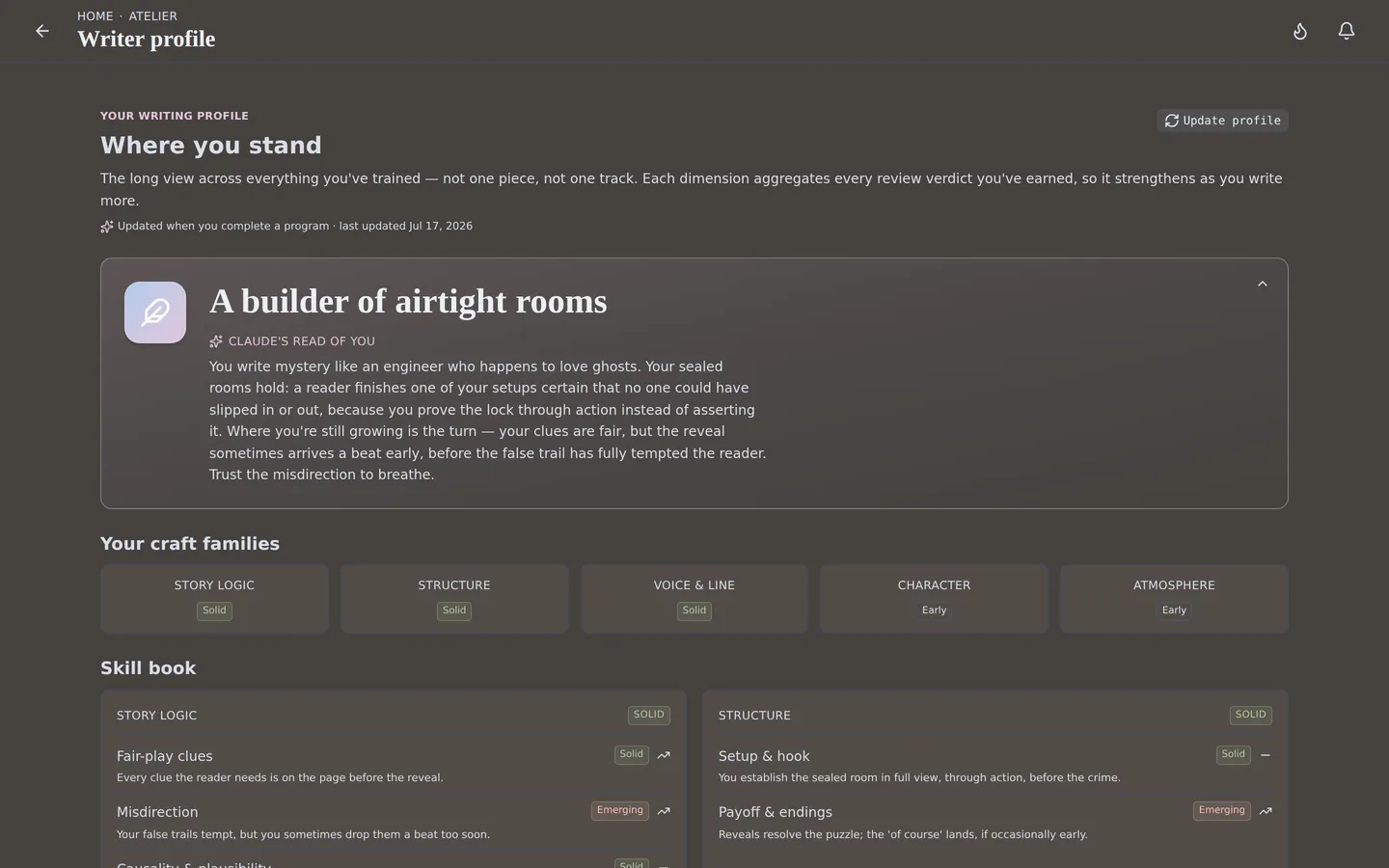
The Prima Lectio reading: a verdict, what holds, and where to start, at the rigor you set.
The manuscript, read in its margin: each note sits next to the passage it quotes.
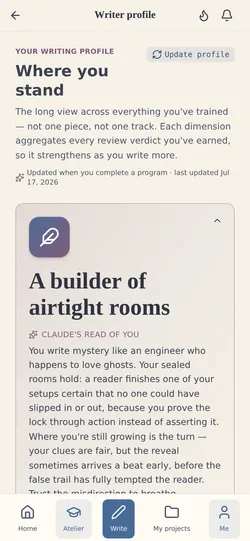
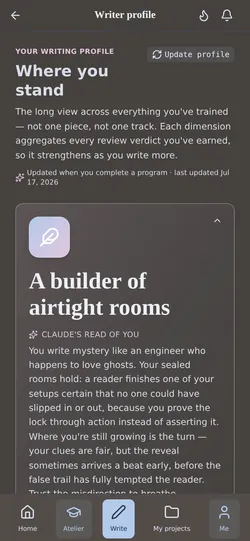
Your private writer profile: where you stand across the craft, built from every reading.
Where the reading turns into revision
Prima Lectio
Every note becomes an item on your worklist, which follows you from one reading to the next. Add your own items; the ones you dismiss stay dismissed. Characters, places and timeline live in the Matière, your story bible.
Beta readers and writing circles
When the time comes, share a frozen snapshot with beta readers you trust, minus any chapters you keep back. Their comments land on the exact passage. In a circle, a few writers read each other's work in turns.
The Atelier
Between two drafts, or when the same thing keeps going wrong: the Atelier breaks one craft move into short exercises. Each carries its own acceptance criteria, and your AI holds you to them.
Novel, short story, memoir, essay: each format gets its own structure.
The questions we get first
- How does your AI read your manuscript?
- You connect Claude to your Inklyne account in two minutes, and Inklyne walks you through the setup; a free Claude account usually covers one or two chapter readings a day. Your AI then reads your text with Prima Lectio, against real craft criteria (core, structure, scenes, characters, style), and tells you what holds, what snags and why, instead of giving you a black-box score.
- How long can my manuscript be?
- Inklyne sets no length limit. Prima Lectio reads your manuscript chapter by chapter, using your own Claude account; with a free account, expect one or two chapter readings a day as a rule.
- Who has access to my texts?
- Your texts belong to you. They are never shared unless you choose to share them, and never sold. Inklyne doesn't use them to train an AI, and in fact trains none: our job is helping you write. Readings go through your own Claude account. You can export or delete your texts at any time.
- Is it free?
- The subscription starts with a 7-day free trial, extendable up to 21 days in total by completing a few onboarding steps. After that, it's €9.99 a month or €99.99 a year: the annual plan works out cheaper, and occasional promotions make it cheaper still. You can also start writing right now, with no account, in the open editor.
Your manuscript deserves a real reading
Upload your manuscript and get your first Prima Lectio reading, chapter by chapter. The first 7 days are free, and you can extend that to 21 by completing onboarding.