

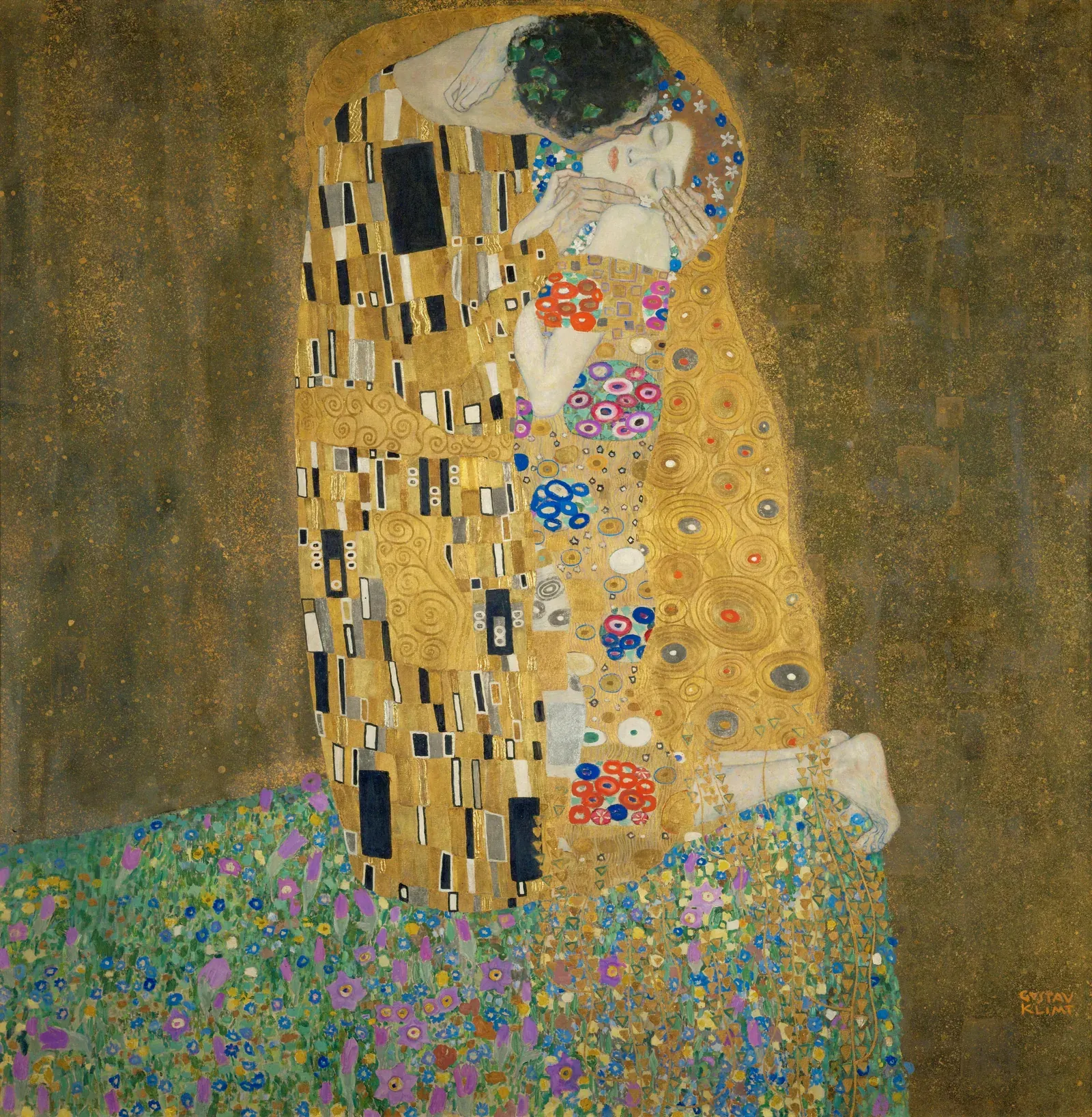

Two people meet who want incompatible things, and neither of them wants to feel what they are beginning to feel. She has a reason to keep him at arm's length; so does he; and both reasons are older than this evening and truer than either will admit. Everything that follows is the slow, mortifying, exhilarating work of those reasons giving way. You already know they end up together. That is not a weakness of the form. It is the whole of its power: the pleasure is not whether, but how, and what it costs.
This is the love story, and it is the most quietly demanding genre in fiction, because it is the one where the external plot is the internal arc. In a thriller the bomb is the bomb. In a romance the obstacle between two people is a wound — a false belief each carries about themselves — and the barrier only falls when the belief does. The genre wears an easy reputation like a disguise. Underneath it is a machine for dramatizing change, and it does not forgive a writer who fakes the change or skips the cost.
The barrier is the story
Strip away the candlelight and the banter and one mechanism remains: an internally motivated barrier that no honest conversation could dissolve. This is the line that separates the genre from its cheap imitation. If your couple is kept apart by a misunderstanding a single sentence would fix — the idiot plot — you have written frustration, not romance. The true barrier lives inside the characters: pride, fear, a self-protecting lie, a wound that makes intimacy feel like danger. Bring the two together and the wounds counter-press; that pressure, not coincidence, is the engine.
And the genre makes a promise it must keep: the emotionally satisfying, optimistic ending — the union earned, not granted. The Romance Writers of America fixed the two non-negotiables plainly: a central love story, and an ending that is emotionally satisfying and optimistic. Break that promise and you have written a fine novel, but not a romance; the reader came for the guarantee, and the artistry is in honouring it without making it feel inevitable.
A short lineage
The form's ancestry runs through the whole history of the novel. Samuel Richardson's Pamela (1740) made courtship itself the engine of an entire book, and Jane Austen perfected the template that still governs the genre: in Pride and Prejudice (1813), two people whose first offence is each other argue their way, wound by wound, to a love neither will admit until pride and prejudice are both dismantled. The enemies-to-lovers arc, the proposal that lands wrong, the dark misjudgement corrected — it is all already there.
The modern genre was built by Georgette Heyer, who essentially invented the Regency romance across a career from the 1920s to the 1970s, giving the form its wit, its research, and its conventions. The mid-century houses — Mills & Boon in Britain, Harlequin in North America — industrialised the beat-sheet into a reliable emotional contract, and contemporary craft has named those beats precisely, from the meet to the dark moment to the grand gesture. Every one of those beats is a place where a wound is revealed, tested, or healed.
The code
For all its warmth, the love story obeys an exacting discipline, and the discipline is nobody behaves stupidly. Every step toward and away from love must be driven by a legible want, never by contrivance. From that rule the architecture follows.
First the meet: the two want incompatible things in the same scene, and the involuntary attraction shows through behaviour, not narration. Then the wound: dramatized through a present trigger rather than a backstory dump, so the reader feels the old injury without being told it. Then the ratchet: a concrete step closer, with the wound counter-pressuring in the very same scene. Then the fork — a banter duel where the real subject is never stated, or an almost-moment that fails because of the wound and not because of outside interference. Then the dark moment: a trigger that plausibly confirms the false belief one last time, the retreat echoing the established pattern, and — crucially — no one acting like an idiot to make it happen. And finally the grand gesture: the exact inverse of the wound, the acceptance active rather than passive, the happy ending earned and on the page.
That sequence is the spine of the form, and the thing it will not tolerate is the unearned reunion. Heal the wound with a coincidence instead of a choice, and the ending is a gift the characters didn't pay for; the reader feels the counterfeit at once. Make the change cost something, and the promised ending devastates.
Master the convention, then break it
There is a temptation to reach straight for the subversion — the anti-romance, the ending that withholds, the wink at the tropes before the tropes have been honoured. Resist it. The conventions are a contract with a reader who has trusted you with their hope, and you earn the right to bend the form — the queer romance, the bittersweet variation — only after you can deliver the straight promise so well it aches. The full argument — why every code must be learned to perfection before it may be broken — has an essay of its own; romance is simply its fiercest training, because it rewards nothing but earned emotion, and nothing exposes a lazy hand faster than a love that arrives without a wound to overcome.
Footnotes
- The Romance Writers of America long defined the genre by two elements: "a central love story" and "an emotionally satisfying and optimistic ending" — the reader's guaranteed pay-off, and the constraint the whole craft is built around.
- Richardson, S. (1740). Pamela; or, Virtue Rewarded; Austen, J. (1813). Pride and Prejudice. Austen's enemies-to-lovers structure — mutual misjudgement dismantled beat by beat — remains the genre's master template.
- Heyer, G., across roughly 1921–1974, effectively created the Regency romance as a subgenre, fixing much of its wit, period detail, and convention.
- The category houses Mills & Boon (UK, founded 1908) and Harlequin (Canada, founded 1949) standardised the emotional beat-sheet; modern craft guides such as Gwen Hayes's Romancing the Beat (2016) map those beats — meet, adhesion, deepening, dark moment, grand gesture — explicitly.