

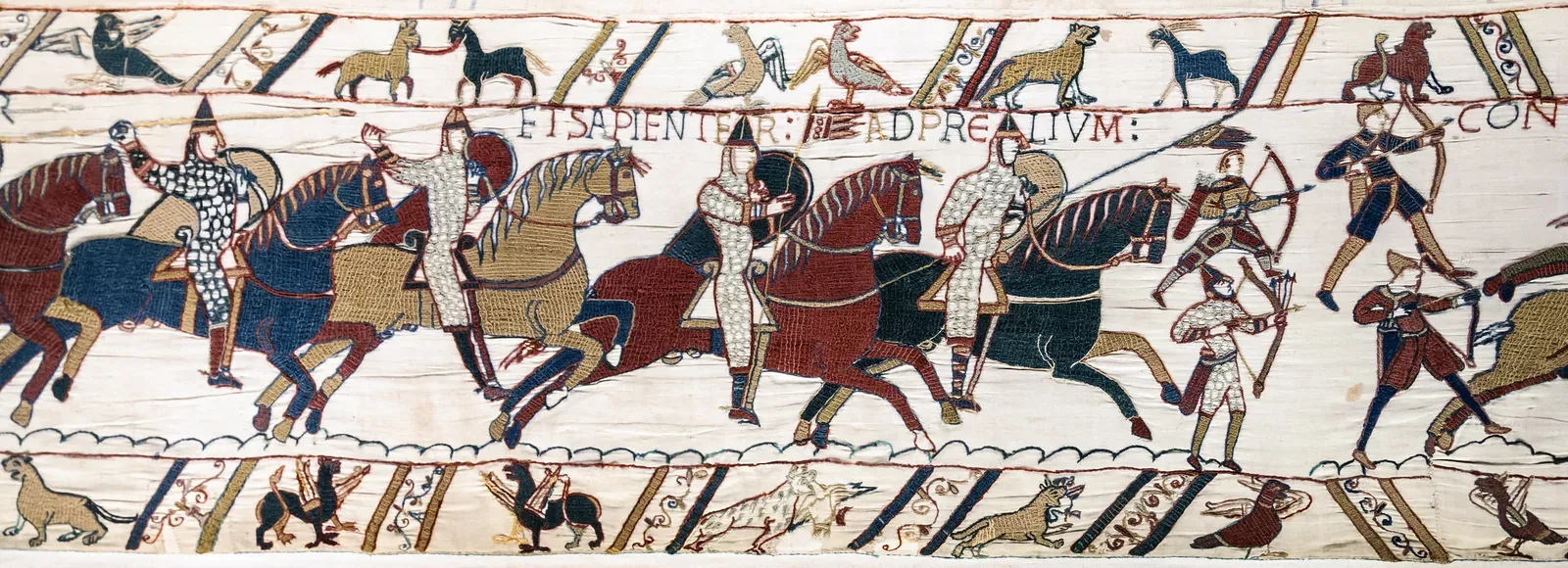

A figure stands at the edge of the only world they have ever known — the last fire of a dying village, a sword half-buried in a salt flat, the door of a house whose name they have tried to forget — and something on the far side is calling. Everyone reading knows they will go. The question is never whether; it is what it will cost. That cost is the engine. Heroic fantasy promises you a world where wonder is real, and then it makes you pay for every wonder in coin the reader watched being minted.
This is heroic fantasy, and it is the most hopeful of the old story-shapes, because it insists that an ordinary person, sufficiently pressed, can matter to the fate of the world. It borrows the epic's architecture — the hero who leaves, is tested, and returns changed — and grounds it in a rule as strict as any mystery's: the magic must play fair. The marvelous is not licence to invent an escape at the last moment; it is a promise, made early and in plain sight, that the finale will keep.
The magic is the promise
Strip away the maps and the invented tongues and one mechanism remains: a power whose price the reader saw set, spent at the climax to win a victory that therefore costs something. Everything the ending needs must be planted first — the gift and its limit, the flaw exposed in the first trial, the sacrifice chosen at the turn. Brandon Sanderson put the working rule plainly: an author's ability to solve conflict with magic is directly proportional to how well the reader understands that magic. A wizard who discovers a new spell exactly when the plot requires one has not been saved by magic; they have been rescued by the author, and the reader feels the cheat as surely as they feel it in a mystery that hides its own clue.
That is why the form is such a demanding teacher. It forbids the deus ex machina the way the heist forbids the unplanted tool. A power with no cost is a wish; a power with a cost the reader watched being named is a source of dread and of choice. The satisfaction of the reckoning is measured exactly by how honestly the gift was bound — how clearly, three scenes earlier, you told the reader what it would take.
A short lineage
The roots run to the oldest stories we have: Beowulf and the Norse sagas, where a hero meets a monster, and the meeting is also a meaning. The modern secondary world begins with William Morris's late romances and E. R. Eddison's The Worm Ouroboros (1922), but the form's centre of gravity is J. R. R. Tolkien, whose The Lord of the Rings (1954–55) fused the epic's scope with the novel's interiority — and whose essay "On Fairy-Stories" (1947) argued that the enchanted world must obey an inner consistency, or the spell breaks.
Alongside the high mode runs the low: Robert E. Howard's Conan stories, beginning with "The Phoenix on the Sword" (1932), gave us sword-and-sorcery — muscular, mortal, suspicious of thrones — a strand Fritz Leiber named and refined in his Fafhrd and Gray Mouser tales. Then two writers bent the form toward conscience and cost: Ursula K. Le Guin, whose A Wizard of Earthsea (1968) made magic a matter of true names, balance, and the price of pride; and Michael Moorcock, whose doomed Elric wields a sword that devours the souls of those he loves. Le Guin's equilibrium and Moorcock's cursed blade are the same lesson in two keys — power is paid for — and they are the direct ancestors of the bound gift at the heart of this track.
The code
For all its wonder, heroic fantasy obeys an exacting discipline, and the discipline is the plant. Nothing may resolve the quest that was not shown, in advance, carrying its price. From that one rule the architecture follows.
First, the hearth: ground the hero in a concrete ordinary world with a want and a duty in tension, so the reader loves the small life before it is threatened and feels the call cost something to answer. Then the threshold: cross into the perilous world and teach its rules by dramatizing one wonder and one danger, never by cataloguing — worldbuilding is a verb. Then the bound gift: a mentor, characterised through action, passes a power with a stated price and a hard limit; this is the sealed room, the promise the finale will pay. Then the trial: a set-piece with legible geography that exposes the hero's flaw rather than flatters their strength, and that pays the gift's cost on the page. Then the turn — a sacrifice chosen, or a dark bargain refused — that reframes the opening want and proves the quest has changed what the hero values. And finally the reckoning and the return: the climax built entirely from what was planted, landing as inevitable; and the hero home again, changed, measured against the hearth by contrast, the meaning shown and not spoken.
That sequence is the spine of the monomyth Joseph Campbell traced across a thousand cultures — useful as a lens, ruinous as a checklist. The beats are not the point; the cost is. The one thing the form will not tolerate is the unearned victory. Give the hero a power that was never bound, and you hand the reader the exit; the dread drains out through the hole you opened. Bind the gift, pay its price, and the reckoning detonates.
Master the convention, then break it
There is a temptation to reach straight for the subversion — the hero who fails, the dark lord who was right, the wink at Tolkien before Tolkien has been honoured. Resist it. The recent "grimdark" turn, from George R. R. Martin to Joe Abercrombie, earns its power precisely by breaking a shape the reader still believes in; the disillusion only bites if the ideal felt real first. The full argument — why every code must be learned to perfection before it may be broken — has an essay of its own; heroic fantasy is simply its most fertile training ground, because nothing exposes a clumsy hand faster than a climax that spends a power the writer forgot to plant.
Footnotes
- Sanderson, B. (2007). "Sanderson's First Law." The rule is usually paraphrased: a magic system's usefulness in resolving conflict scales with how clearly its rules and limits are established for the reader. Sanderson distinguishes "hard" magic (explicit rules, licence to solve problems) from "soft" magic (mystery preserved, best kept away from the climax).
- Beowulf (Old English, composed c. 700–1000 CE) and the Icelandic sagas and Eddas are the deep roots of the heroic mode: a mortal confronting a monstrous other, the encounter freighted with meaning about courage, mortality, and fate.
- Morris, W., late prose romances (1890s); Eddison, E. R. (1922). The Worm Ouroboros; Tolkien, J. R. R. (1954–55). The Lord of the Rings, and the essay "On Fairy-Stories" (delivered 1939, published 1947), which argues for the "inner consistency of reality" that makes a secondary world believable.
- Howard, R. E. (1932). "The Phoenix on the Sword," the first Conan story (Weird Tales). Leiber, F., coined the term "sword and sorcery" in 1961 for the smaller-scale, character-driven adventure strand, exemplified by his Fafhrd and the Gray Mouser series.
- Campbell, J. (1949). The Hero with a Thousand Faces, which proposed the "monomyth" or hero's journey. It is a powerful descriptive lens and a poor prescriptive template — mistaking its stages for a required plot is a common way to write a hollow quest.
- Martin, G. R. R., A Song of Ice and Fire (from 1996); Abercrombie, J., The First Law trilogy (from 2006). Both interrogate heroic-fantasy conventions — the rightful king, the clean victory, the hero's reward — and depend on the reader's prior investment in exactly those conventions to land.